
History
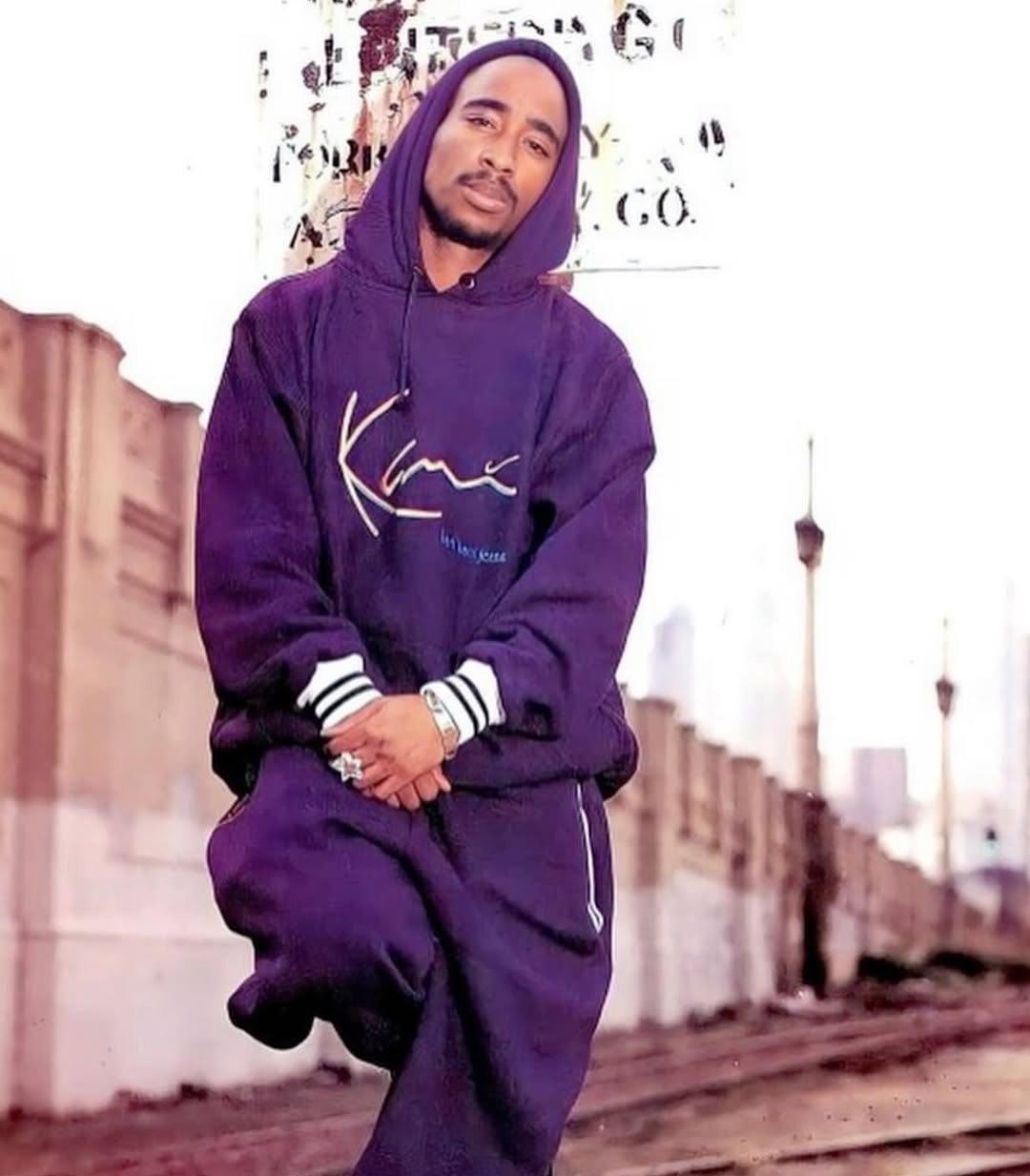
Artists like 2Pac, Notorious B.I.G. and Will Smith celebrated the brand for its casual cuts and stylish designs in the '90s. Many icons still celebrate it to this day.
The brand was founded by a nineteen-year-old Karl Kani in Brooklyn in 1989. Originally known as Carl Williams, he was the first to introduce the concept of baggy jeans. Today, Karl Kani is recognized worldwide as the cult label of streetwear and hip-hop fashion.
The Godfather of Streetwear
In 1991, a new designer appeared at the annual MAGIC fashion trade show in Las Vegas with a line of urban streetwear that national retailers had never seen before. That designer was Karl Kani — a pioneering visionary who brought baggy denim, oversized shirts and thick hoodies straight from the street to main street.
At MAGIC he stood out as the only Black designer who came straight from the hood with no formal fashion training. He showcased apparel that was designed in the hood, sold in the hood and worn with great fanfare in the hood — capturing the energy, spirit and ethos of communities from Brooklyn to Chicago to Detroit to Los Angeles.
It is no coincidence that publications from The Los Angeles Times to Vibe to Forbes have historically hailed Karl Kani as the quintessential “Godfather of Urban Streetwear” — the pioneer who blazed a trail and popularized a fashion lane that hadn't fully emerged until he created it.
So how did this young, scrappy Black teenager — born to immigrants from Costa Rica and raised in the Starrett City projects of East Brooklyn — make it onto the international fashion stage? To put it bluntly, he hustled. Karl Kani hustled to find his name, hustled to find his fashion voice, and built his brand through organic, word-of-mouth advertising.
After a thirty-year history garnering nearly half a billion dollars in sales, he keeps building the brand — with a presence in twenty-five countries and flagship stores across Europe and Asia.
Can I?
It all started in the late eighties, when Carl Williams was inspired watching his father and a Haitian tailor design, make and sell matching linen suits around the neighborhood. He decided he would sell clothing in the hood, for the hood. People were buying his pieces, and friends of friends kept asking for more.
Until a skeptical friend pushed back: “Your name ain't on it.” That comment became a monumental tipping point. Carl began to ask himself — why weren't his name and his brand anywhere on the clothing he was making? Could he make an independent living doing what felt like a calling?
“Can I? Can I? Can I?”
At just eighteen, he wrote it down over and over, like a rap lyric or a mantra. And then it stuck — Carl Williams became Karl Kani, his new official name and the new moniker for his clothing line.
More ambitious than ever, he soon expanded the brand to a larger mainstream audience by moving to Los Angeles — and was blessed by all the success that would follow. Karl Kani emerged before Phat Farm, Rocawear, Sean John and many other hip-hop streetwear lines that would later build off his success.
The Rise in Los Angeles
Ambitious as ever, Karl moved to Los Angeles to take the brand mainstream. In 1989 he opened a shop named “Seasons” on Crenshaw Blvd. — gang central in the early nineties — and within months it got robbed. With little money in his pocket and a string of evictions from small apartments that doubled as warehouses and design studios, he began the hard process of hustling anyone and everyone who could help him get the brand off the ground.
Karl and his friend and business associate Aze hustled the workers outside the Guess factory in Downtown LA. One of them told them where to buy fabric, where to find denim wash factories, and the other essential details they needed to scale a garment business. An ad in the popular youth magazine Right On! brought in the first phone orders. Karl knew he was onto something big.
The key breakthrough came when he randomly ran into Ed Lover and Dr. Dre of Yo! MTV Raps on Melrose Ave. Both became ambassadors of the brand and introduced it to hip-hop artists and celebrities. They didn't just wear Karl Kani — they name-checked the brand in their lyrics: from Jay-Z to Nas, Notorious B.I.G., Redman, Snoop and Dr. Dre.
No one promoted the brand more than the legendary Tupac Shakur, who voluntarily, free of charge, posed for a Karl Kani ad campaign atop a basketball hoop in the Brooklyn projects — an indelible image that took the nation by storm. All of it followed an improvised, grassroots marketing approach no one else was using at the time.
Partnerships and Growth
The biggest breakthrough came through a connection to Carl Jones, the president of Cross Colours. Jones had seen Karl's work in Right On! and knew his vision of “baggy and colorful” streetwear was onto something big. Karl accepted a partnership under the Cross Colours and Threads 4 Life umbrella in 1991. Within the first year, revenues surpassed $89 million — with the Karl Kani line contributing a whopping 40% of that total.
After Cross Colours filed for bankruptcy in 1993, Karl pivoted again, teaming up with Robert Greenberg on a Karl Kani footwear line worn and promoted by NBA legends like Karl Malone, Derek Fisher and John Wallace. But when Greenberg wanted to take the brand public alongside Skechers, Karl refused — insisting on holding onto his brand and his name, rather than being beholden to Wall Street speculators.
And so it went. The hustles, the pivots and a relentless determination to keep Karl Kani relevant and legit — through changing generations, shifting tastes in music and the ever-changing ups and downs of fashion trends.
More Than Just Fashion
More than thirty years on, Karl Kani is still here, and his footprint can be seen everywhere — in the new and emerging brands building on the foundation he laid. Quality craftsmanship and the pride of bringing the fashion of the street to main street simply doesn't go out of style.
Fans still feel the clothing the way they feel the music — the freedom, strength and vitality captured in Tupac's famous photo atop that basketball hoop. They want to wear threads from the pioneer, the originator, the visionary of urban streetwear who brought hip-hop to life through clothing.
“No one would dare say they started streetwear before Karl Kani.”
“It started on the streets of New York, took off through the partnerships forged in LA, spread nationwide, and continues as a new, dominating worldwide force in Europe and Asia. Not many independent brands have lasted thirty years, but we have. And we aren't stopping anytime soon.”